
Clean retail premises support a welcoming shopping experience and help keep customer and staff areas orderly. Shop cleaning services typically cover floors, counters, fitting rooms, washrooms and frequently touched surfaces, with tasks scheduled around trading hours.
In Dubai, shops need to stay ready for customers while daily foot traffic brings ongoing cleaning needs. A clear routine helps manage visible dirt and shared spaces without disrupting service.
This guide explains why retail cleaning matters, which areas need regular attention and how to schedule work outside business hours. It also covers practical factors to consider when planning cleaning around your premises and operating routine.
Key Takeaways
- See how a tailored cleaning plan can account for a shop’s layout, customer flow and recurring tasks.
- Learn how commercial cleaning can support orderly retail spaces without treating every premises the same way.
- Identify the checkout, fitting-room and restroom details that deserve focused attention in a cleaning routine.
- Find practical ways to schedule cleaning around trading hours and keep disruption to daily operations low.
Why Is Professional Retail Cleaning in Dubai Important?
Dubai shops handle regular customer movement, which brings dust and marks onto floors, counters and shared surfaces. A planned cleaning routine helps keep these areas presentable and supports consistent retail operations.
Tailored Plans and Cleaning Schedules
A practical plan matches cleaning tasks to the shop layout, high-traffic areas and opening hours. For a retail chain, use a consistent task list across branches, then adapt it to each site’s entrances, displays and staff facilities. Where practical, schedule floor care and detailed cleaning outside trading hours, and set priorities for daily upkeep. Define the areas and tasks included in the shop cleaning services.
When comparing a one-time clean with recurring service, consider the scope, frequency, included tasks and flexibility. A one-time visit suits a specific reset; recurring work supports ongoing upkeep. The quote depends on the premises, cleaning scope and schedule. Assess any discount against the actual scope and contract terms.
Cleaning for Different Store Types
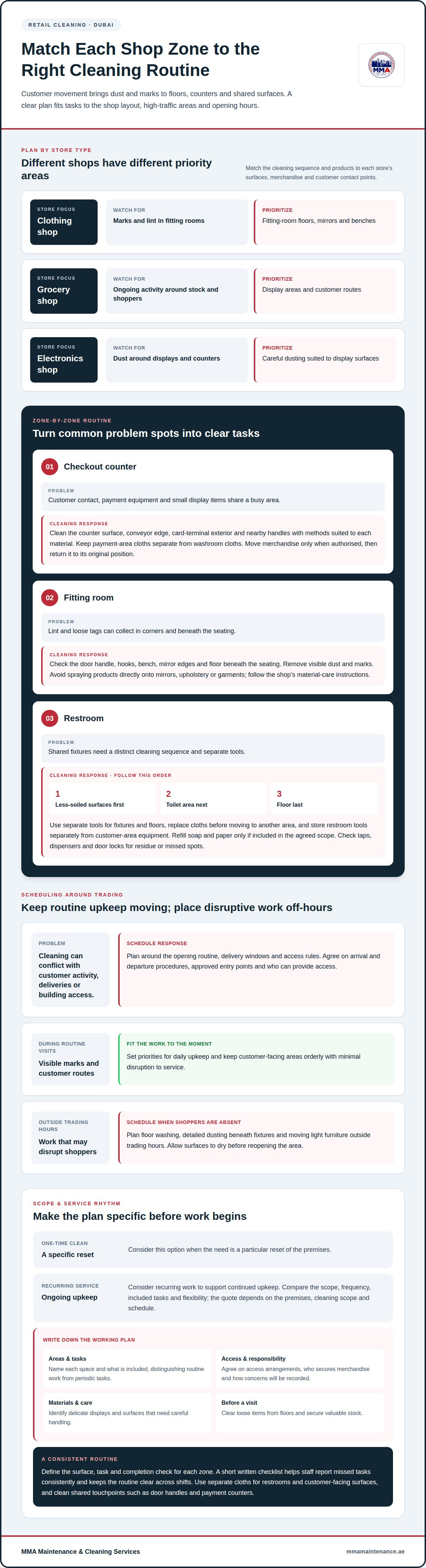
A clothing shop may need attention to fitting-room floors, mirrors and benches, while a grocery retailer may prioritize display areas and customer routes. An electronics shop may need careful dusting around displays and counters. Match the cleaning sequence and products to each store’s surfaces, merchandise and customer contact points.
Retail cleaning can cover floors, counters, shelves, glass, fitting rooms and washrooms. To reduce cross-contamination, use separate cloths for restrooms and customer-facing surfaces, and clean shared touchpoints such as door handles and payment counters. Detailed cleaning can also address accumulated dirt in corners, under fixtures and along floor edges.
Shop owners should consider access, the risk of damage and who is responsible for securing merchandise or reporting issues. Agree on the cleaning scope, access arrangements and how concerns will be recorded. Before a visit, clear loose items from floors, secure valuable stock and identify delicate displays or surfaces that need careful handling.
Commercial cleaning for shops and business premises
Commercial cleaning should suit the surfaces in each area and the work taking place nearby. A shop entrance needs different attention from a stockroom or staff office. A useful scope names each space, its tasks and whether the work is routine or periodic. For example, display glass and tiled floors may need different cleaning methods.
Offices and commercial buildings also need plans suited to their layouts. Reception desks, meeting rooms, shared kitchens and washrooms have distinct touchpoints and surfaces. Grouping tasks by area helps keep spaces orderly without overlooking less visible spots, such as corners behind furniture. In Dubai, building access arrangements and permitted hours can also shape the schedule.
When choosing shop cleaning services in the UAE, compare the written scope, task sequence, communication process and experience with premises like yours. A clear plan identifies the areas included, responsibilities and how access or reported concerns will be handled.
Licensing and insurance obligations depend on applicable UAE rules and the activity involved. When assessing a cleaning business, consider the activity covered by its trade licence and the risks addressed by its insurance, rather than relying on a general description of the work.
Related commercial cleaning can include shared offices, building entrances and exterior surfaces, with each task planned around its material and use. Keep the scope focused: interior cleaning addresses occupied spaces, while facade work concerns the building exterior. If you’re considering connected premises upkeep, explore property maintenance options as part of the wider plan.
Checkout, fitting-room and restroom cleaning
Checkout counters combine customer contact, payment equipment and small display items. Clean the counter surface, conveyor edge, card terminal exterior and nearby handles using methods suited to each material. Keep cloths used around payment areas separate from those used in washrooms. Move merchandise only when authorised, then return each item to its original position.
Fitting rooms need attention beyond the mirror. Include the door handle, hooks, bench, mirror edges and floor beneath the seating. Remove visible dust and marks before checking corners where lint and loose tags collect. Cleaners should avoid spraying products directly onto mirrors, upholstery or garments. A trained cleaner can follow the shop’s material-care instructions and leave the space ready for customers.
Restroom tasks should follow a clear sequence: clean less-soiled surfaces first, then the toilet area, and finish with the floor. Use separate tools for fixtures and floors, and replace cloths before moving to another area. Refill soap and paper supplies only if these tasks are included in the agreed scope. Check taps, dispensers and door locks for residue or missed spots.
For each zone, define the surface, task and completion check. A checkout checklist, for example, can cover the counter, terminal exterior and queue barrier; a fitting-room check can include the mirror, hooks and floor. Store restroom tools separately from equipment used in customer areas. After cleaning, inspect high-touch points and remove dampness that could affect use. A short written checklist helps staff report missed tasks consistently and keeps the routine clear across shifts.
Cleaning schedules outside business hours
Plan cleaning around the shop’s opening routine, delivery windows and building access rules. A clothing retailer, for example, may schedule floor cleaning after displays are reset, while a grocery shop may need clear access after stock handling. Agree on arrival and departure procedures, approved entry points and who can provide access. Clear arrangements help prevent delays and confusion.
Separate tasks by timing. Handle visible marks and customer routes during routine visits, then schedule disruptive work outside trading hours. Floor washing, detailed dusting beneath fixtures and moving light furniture can take place when shoppers are absent. Allow surfaces to dry before reopening the area, and keep equipment away from merchandise and walkways.
A practical plan follows a clear sequence:
- Record opening hours, delivery periods and building access instructions.
- List the rooms and surfaces included, such as the entrance, sales floor and staff area.
- Set the order of work, from less soiled areas to washrooms and floors.
- Agree how completed tasks and access issues will be reported.
A mall unit may need a schedule aligned with property access arrangements, while a street-facing shop may have different entry and closing routines. Keep the approved schedule somewhere the manager and cleaning team can refer to it. Update it when store hours, stockroom use or layout changes. Clear instructions also help staff prepare by securing merchandise and moving loose items from the floor.
Before confirming a routine, compare the task list with the time available and the shop’s busiest periods. Ask whether floor drying, waste handling and final checks fit the agreed window. A realistic schedule prioritizes essential indoor areas first, then includes periodic detail work without interrupting customer service. Discuss a cleaning plan for your property to organise the work around its operating routine.
MMA Maintenance & Cleaning Services: House Cleaning
MMA Maintenance & Cleaning Services provides House Cleaning for homes that need routine upkeep or a more focused clean. This is separate from a retail cleaning plan, which should reflect the shop’s layout, surfaces and operating schedule.
For property owners managing both a home and commercial premises, consider the needs separately. House Cleaning addresses indoor household areas, while Facade Cleaning, Electrical and Painting cover other property work. Clearly defining each premises and task helps keep requests focused and expectations practical.
If your household needs cleaning support alongside your property maintenance needs, contact MMA Maintenance & Cleaning Services to discuss the work.
Set a clear plan for your next property service
Make the next decision practical: write a short property brief that separates retail cleaning needs from other maintenance work. Name the spaces, the result needed in each area and any access constraints. Record who approves changes and where staff can report issues. This shared reference makes it easier to review shop cleaning services and define what belongs in the cleaning scope.
For premises with broader upkeep needs, MMA Maintenance & Cleaning Services offers House Cleaning, Facade Cleaning and Electrical. Define these as separate tasks from the retail cleaning plan. Keep one point of contact responsible for updating the brief when the premises, tenants or operating arrangements change.
When you’re ready to discuss relevant property work, contact MMA Maintenance & Cleaning Services. A clear brief is a practical place to begin.
Frequently Asked Questions
What shop cleaning services are available in the UAE?
A retail cleaning scope can cover sales floors, entrances, display glass, stockrooms, staff areas and washrooms. A small boutique may need careful cleaning around delicate displays, while a larger shop may include more back-of-house areas. Agree which tasks are included, such as waste removal or interior glass cleaning, so the scope reflects the premises rather than assuming every package covers the same work.
How much do shop cleaning services cost in the UAE?
The cost depends on the premises and work required, so there is no single price for every shop. For a Dubai quote, describe the areas, cleaning tasks, surface condition and preferred schedule. These details help define the work and its cost. MMA Maintenance & Cleaning Services provides quotations based on the property and its needs.
What factors affect the price of shop cleaning in Dubai and Abu Dhabi?
Pricing can depend on the shop’s size and layout, the cleaning required for each surface, and the number of areas included. A shop with extensive display fixtures has a different scope from an open sales floor. Access arrangements and whether the work is a one-time visit or recurring also affect planning. In Dubai, assess these factors against the specific premises and requested tasks.
How often should a shop be professionally cleaned?
Set the schedule according to customer traffic, visible soil and how quickly surfaces need attention. A shop near a busy entrance may need more frequent floor care than a low-traffic stockroom. Review the routine when store hours, seasonal foot traffic or product displays change. Managers can note recurring marks or missed areas, then use those observations to adjust priorities with the cleaning team.
What cleaning products and methods are safe for retail stores and customers?
Use products suited to each surface and follow their label directions. A cleaner suitable for sealed flooring, for example, may not be appropriate for delicate display materials. Keep products away from merchandise, avoid applying them directly to electronic equipment and let cleaned areas dry before customers enter. Use separate tools for washrooms and sales areas, and remove product residue from touchpoints after cleaning.
Can shop cleaners work after hours or before a store opens?
Cleaning can be scheduled before opening or after closing when timing, access and the task sequence are agreed in advance. Share store opening times, delivery windows, entry instructions and any areas that must remain undisturbed. For example, schedule floor work before staff arrange displays, leaving time for surfaces to dry and for a final walk-through before the shop opens.


