

Set your AC to 24°C as a practical starting point for balancing comfort and cooling use in Dubai. The most useful high DEWA bill AC cooling efficiency fixes are straightforward: use a sensible thermostat setting, keep filters clean and reduce heat entering your home. Lowering the temperature sharply can make the system work harder without making the room cool faster.
If your DEWA bill rises during the summer, AC use is an obvious place to look, but the setting is only part of the picture. This guide explains how to adjust your thermostat, maintain filters and spot airflow issues, then outlines home improvements such as shading and sealing gaps. You’ll have a practical sequence for managing cooling use and identifying when HVAC maintenance or an upgrade may help.
Key Takeaways
- Use 24°C as a practical starting point, then adjust your AC settings to suit your comfort and routine.
- Check filters regularly during Dubai’s peak summer; restricted airflow can make your AC work harder.
- Reduce heat entering your home with shaded windows and well-sealed doors and windows.
- Learn how to spot signs that airflow, thermostat settings or home upgrades may need attention.
1. How often should I clean my AC filters in Dubai?
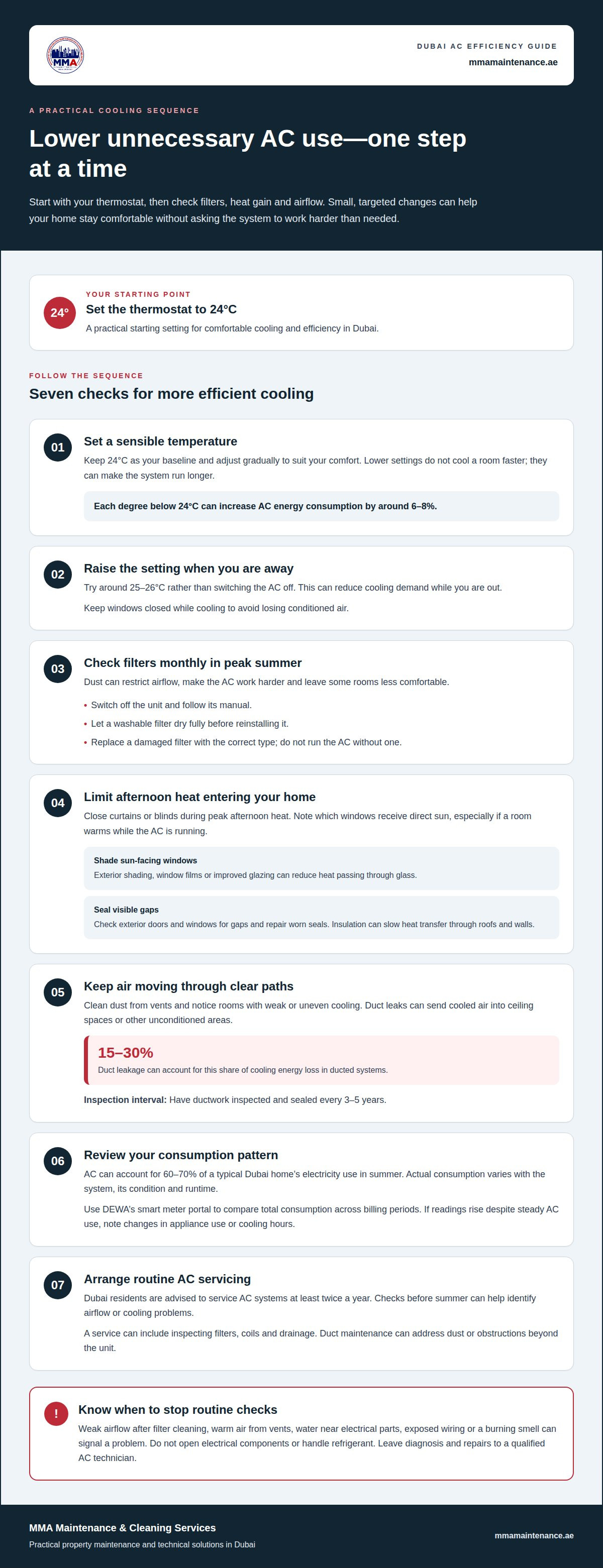
Check your AC filters monthly during Dubai’s peak summer. Dust can collect quickly, and a clogged filter restricts airflow. The system then works harder to move cooled air, which can increase electricity use and leave some rooms less comfortable. Restricted airflow may also put extra strain on the compressor.
For a removable filter, switch off the unit, follow its manual and clean the filter as directed. Let a washable filter dry fully before reinstalling it. If the filter is damaged or the manufacturer specifies replacement, use the correct type rather than running the AC without a filter. Check it monthly during heavy summer use and note whether dust returns quickly.
Filter cleaning is only one part of maintenance. Dubai residents are advised to service AC systems at least twice a year, with checks before summer helping identify airflow or cooling problems. A service can include inspecting filters, coils and drainage, while duct maintenance addresses dust or obstructions beyond the unit. Dirty indoor or outdoor coils can affect heat transfer, so cleaning should follow the system’s maintenance requirements.
If airflow remains weak after filter cleaning, or warm air comes from the vents, the cause may be a blocked duct, fan fault, refrigerant leak or compressor problem. A clogged condensate drain can also cause water to back up and damage interior finishes. If you’re unsure how to reach a component, stop at routine filter care.
For a Dubai rental, your tenancy agreement and its maintenance terms are the practical starting point for determining responsibility for filter cleaning and AC repairs. Review the relevant clauses and contact your landlord or property manager if responsibility is unclear.
Burning smells, exposed wiring, water near electrical parts or persistent warm airflow are warning signs. Don’t open electrical components or handle refrigerant. Leave diagnosis and repairs to a qualified AC technician.
2. What is the best AC temperature to reduce my DEWA bill?
Set your thermostat to 24°C as a practical starting point for comfortable cooling in Dubai. If you’re away, raising the setting to around 25 to 26°C can reduce cooling demand without switching the AC off. Lower settings don’t make a room cool faster; they can keep the system running longer.
Air conditioning can account for 60-70% of a typical Dubai home’s electricity use in summer. A standard split AC unit may consume 1-3 kWh per hour. Central and ducted systems vary with their capacity, condition, and runtime, so check actual consumption through your DEWA account rather than assuming every system uses the same amount. Keep windows closed while cooling to avoid losing conditioned air.
DEWA’s tiered rates mean the electricity charge rises as monthly consumption moves into higher slabs. According to Dubai Electricity and Water Authority (DEWA), the rate is AED 0.23 per kWh for monthly usage from 0 to 2,000 kWh. According to Dubai Electricity and Water Authority (DEWA), it is AED 0.28 per kWh for monthly usage from 2,001 to 4,000 kWh. According to Dubai Electricity and Water Authority (DEWA), the rate is AED 0.38 per kWh for monthly usage above 6,000 kWh. A fuel surcharge of AED 0.060 per kWh also applies.
Actual bills vary with home size, AC runtime and other electricity use.
Use DEWA’s smart meter portal to review total consumption and compare patterns across billing periods. If readings rise despite steady AC use, note changes in appliance use or cooling hours. For unusual electrical issues, you can discuss electrical work with the team.
3. Insulation, window films, shading and glazing upgrades
Dubai’s afternoon sun can raise indoor temperatures through exposed windows and poorly insulated walls. Close curtains or blinds during peak afternoon heat to limit solar gain. If a room warms while the AC is running, note which windows receive direct sun. These observations can help identify where shading or a window upgrade may reduce heat entering the room.
For a high DEWA bill, AC cooling efficiency fixes can start with simple air-leak checks. Look for visible gaps around exterior doors and windows. Cool air escaping through openings can make the AC run longer to maintain its setting. Repair worn seals and keep windows closed while cooling. Insulation improvements can also slow heat transfer through the roof or walls, helping rooms hold a steadier temperature.
Ductwork matters too. Leaks can release cooled air into ceiling spaces or other unconditioned areas, leaving rooms warm even while the AC runs. In Dubai, duct leakage can account for 15% to 30% of cooling energy loss in ducted systems. Have ductwork inspected and sealed every 3-5 years. A professional can identify leaks, damaged connections, and sections that need attention.
Window films and improved glazing can reduce heat passing through glass, especially on sun-facing windows. Choose an option suited to the window and room rather than covering every pane automatically. Exterior shading can block sunlight before it heats the interior. Limit direct afternoon exposure while preserving useful daylight.
The most useful high DEWA bill AC cooling efficiency fixes address both heat gain and cooling problems. For example, a west-facing room with weak seals and uneven cooling may benefit from sealing, shading and a duct inspection. Addressing these sources can reduce unnecessary AC runtime. First identify where heat enters, then improve seals or insulation and review room cooling. Cleaning dust from vents can also help keep airflow paths clear.
4. Thermostat settings and cooling consumption
Keep 24°C as your starting thermostat setting, a DEWA-recommended balance for home comfort and efficiency. Each degree below 24°C can increase AC energy consumption by around 6-8%. A very low setting may extend cooling rather than make an apartment cool faster, increasing electricity consumption while you’re paying for longer operation.
Use a ceiling or tower fan to circulate air, then try raising the thermostat by 2°C. Fans cool people by moving air, so you may feel comfortable at a higher temperature. Switch the fan off when the room is empty; it cools occupants, not the room itself. Make small adjustments and observe comfort before changing the setting again.
Timers and scheduling functions can match AC operation to your household routine. Set cooling for the hours you use a room, then scale it back at night or when the space is unoccupied. Smart thermostats and timers can reduce cooling costs by around 15-25% when used to schedule AC. Results depend on the schedule and how consistently the settings are followed.
Check the AC fan setting as well as the thermostat. In Dubai, setting the fan to “AUTO” instead of “ON” avoids continuous fan operation and supports dehumidification. “ON” can keep the fan running after the cooling cycle ends, moving air without active cooling. Follow the unit’s controls and compare how each setting affects comfort.
Keep a simple record of settings and usage patterns for several days. For example, note the thermostat setting, schedule, and whether the ceiling fan was used. Compare those notes with your DEWA consumption readings to see which changes align with lower use. If thermostat controls or electrical connections need attention, speak with the team about electrical work.
MMA Maintenance & Cleaning Services
MMA Maintenance & Cleaning Services supports property work that can complement cooling-efficiency improvements. If an electrical issue affects your home’s systems, the team provides Electrical work. For related property upkeep and finishing, it also offers Painting, Facade Cleaning and House Cleaning.
These services can help homeowners and property teams coordinate building needs alongside energy-saving changes. Painting can form part of planned interior or exterior work, while Facade Cleaning addresses the outside face of a building. Share your property requirements with the team to discuss the work and next steps.
Contact MMA Maintenance & Cleaning Services to discuss your property requirements.
Make your next cooling improvement practical
Choose one change that fits your home, then observe its effect on comfort and electricity use before adding another. This makes it easier to identify which AC cooling-efficiency fixes may help with a high DEWA bill and which property improvements need professional attention.
MMA Maintenance & Cleaning Services supports property work including Electrical, House Cleaning and Facade Cleaning. If you’re planning several improvements, one point of contact can help keep the work aligned with your property’s needs. Share the issue you’re addressing and the work you have in mind.
Contact MMA Maintenance & Cleaning Services to discuss your requirements and decide on a practical next step. Steady, well-planned improvements can help you manage your home’s cooling more confidently.
Frequently Asked Questions
What is the best AC temperature to reduce my DEWA bill?
Start at 24°C and keep the setting steady while you assess comfort. Frequent changes can make it harder to tell whether a schedule or temperature adjustment affects consumption. For example, if one bedroom feels cooler than the living room, check airflow and sun exposure before lowering the whole home’s thermostat. A consistent setting gives you a clearer basis for deciding what to adjust next.
How much can AC servicing reduce my electricity bill?
There is no fixed bill reduction from servicing; the effect depends on the system’s condition and the fault being addressed. A technician can identify problems such as restricted airflow, dirty coils, or low refrigerant that may reduce cooling performance. If the system is already operating properly, servicing may maintain its condition without producing a noticeable change on your next bill. Track consumption before and after service.
Does turning off the AC when I leave home save money?
For a short absence, raise the thermostat to around 25 to 26°C rather than switching the AC off. This limits active cooling while reducing the risk of returning to a very warm home and demanding rapid cooling. For longer absences, consider your household routine and the time needed to cool the rooms again. Use a timer if your unit has one.
How do I know if my AC is the reason my bill is high?
Compare DEWA consumption across billing periods and note whether an increase coincides with longer AC runtime or hotter weather. Look for clues such as rooms taking longer to cool, the system running continuously or uneven temperatures between rooms. Also consider changes in appliance use or household occupancy. If AC performance has changed, a technical inspection can help identify whether the system needs attention.
How do I lower my AC bill in a Dubai apartment without buying anything?
Use the controls and shading you already have. Set a cooling schedule around the hours you occupy each room, close curtains before direct sun heats the space, and keep doors and windows shut while cooling. Try a ceiling fan before lowering the thermostat. Change one habit at a time, then compare your DEWA consumption readings to see which adjustment suits your apartment.
How often should I clean my AC filters in Dubai?
Check AC filters monthly during peak summer, when dust and frequent use can restrict airflow. Clean washable filters according to the unit’s instructions and let them dry before refitting. Replace a filter if it is damaged or the manufacturer’s guidance calls for replacement. If airflow remains weak after cleaning, the cause may be beyond the filter, such as a duct obstruction or fan issue.


