

A musty AC smell is often a maintenance clue, not just an unpleasant detail: moisture, dirty filters, drain trays, coils or ducts can hold the source of the odour. For ducted AC bad smell removal in Dubai, start by identifying where the smell is coming from rather than masking it; filters should be cleaned or replaced every 1-3 months, and full AC service is recommended every three to four months. This guide explains common causes, practical ways to address musty odours and when a persistent smell after unit-level service calls for duct inspection.
Key Takeaways
- Trace musty odours to moisture, dirty filters, coils or drainage rather than masking the smell.
- Clean or replace AC filters every 1-3 months, and schedule full service every three to four months to help prevent recurring odours.
- If a smell remains after servicing the unit, a duct inspection can help identify an issue in shared or concealed ductwork.
- Routine property maintenance can help keep airflow and drainage in good condition and reduce the chance of odours returning.
How often should I service my AC in Dubai to prevent bad smells?
Dubai’s humidity can worsen AC odours when moisture and dust remain inside the system. Clean or replace filters every 1-3 months, and arrange full AC service every three to four months. These intervals provide a routine starting point for ducted AC bad smell removal in Dubai homes.
Filter Cleaning and Replacement
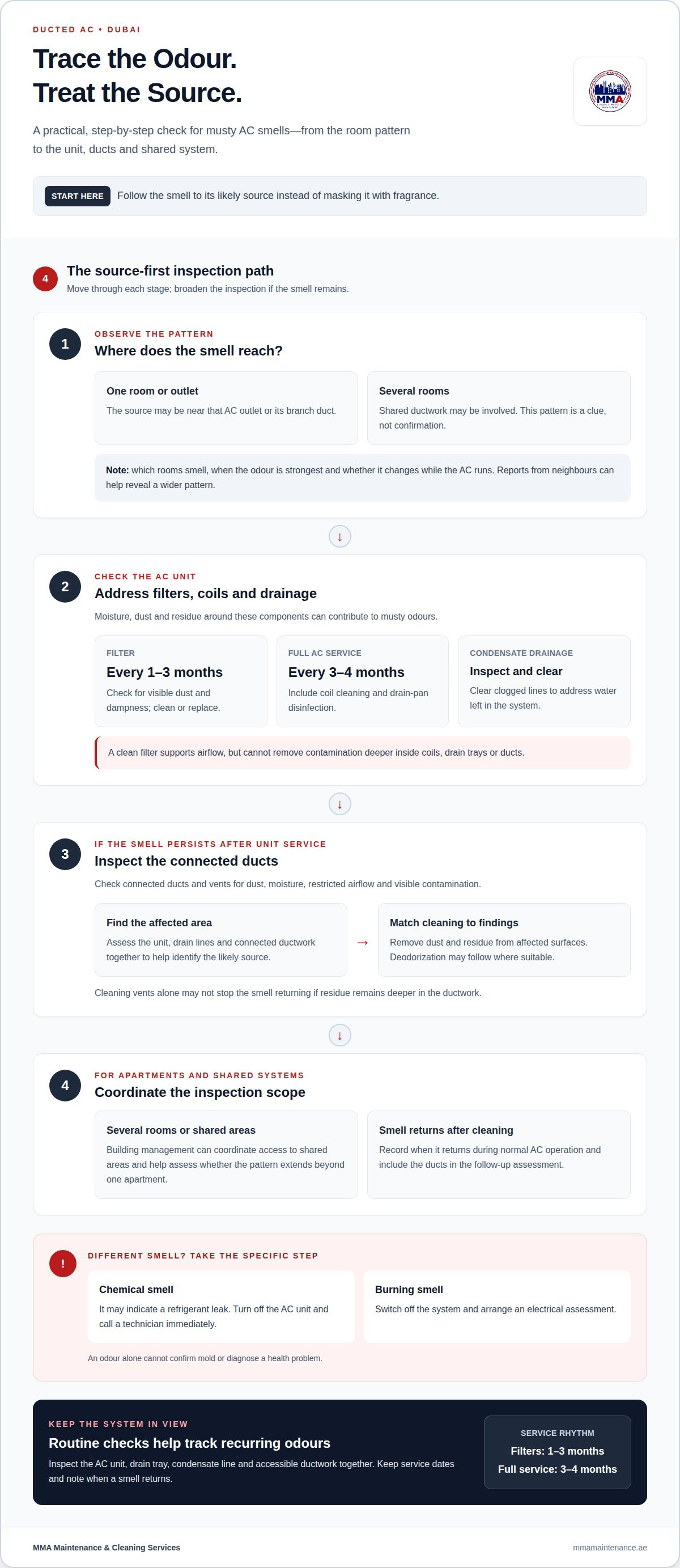
At each service, inspect the filter for visible dust and dampness. Clean or replace it every 1-3 months to help prevent unpleasant smells. Dirty filters can retain moisture, while choked filters restrict airflow. In a ducted AC unit, a clean filter supports airflow but cannot remove contamination deeper inside coils, drain trays or ducts. Note whether the smell returns soon after cleaning; that can indicate another source needs attention.
Coil and Drain-Pan Disinfection
Dust-coated evaporator coils can restrict airflow, and moisture around the drain tray can support bacteria buildup. Professional AC cleaning should include coil cleaning, drain-pan disinfection and condensate-drain clearance. These steps address residue where musty odours can develop, rather than covering the smell with fragrance. A technician can also clear clogged drainage lines, which may otherwise leave standing water in the system. Include these areas in full AC service every three to four months.
Duct Cleaning and Disinfection
If the smell persists after the AC unit and filter have been cleaned, arrange an inspection of the connected ducts. Dust and restricted airflow can carry stale odours through several rooms. Duct cleaning addresses dust and residue inside the ductwork, with treatment of relevant surfaces where appropriate. For ducted AC bad smell removal in Dubai, assessing the unit, drain lines and connected ducts together helps identify the likely source and define the work needed.
How to remove musty smell from air conditioner?
A musty smell can point to moisture, mold or dust inside an AC system. Identify the likely source before deciding what cleaning or maintenance is needed.
Mold and Mildew Removal
Persistent damp odours call for inspection of coils, drain pans and nearby ductwork. These components can retain moisture and support mold or bacteria buildup. Dust and mold contamination can affect indoor air quality, although an odour alone cannot confirm mold or diagnose a health problem. A technician should inspect affected surfaces, remove contamination and address the moisture source. For confirmed mold, IICRC and IAC2 standards can help guide remediation scope.
Odor Source Assessment
Odour type helps focus the inspection, but it does not confirm the cause. A technician can trace a musty smell through the coils, drain pan and ducts; a sewage-like smell also needs source assessment rather than masking. A chemical smell may indicate a refrigerant leak, so turn off the AC unit and call a technician immediately. A burning smell requires prompt attention; switch off the system and arrange an electrical assessment. For this electrical concern, electrical work is a relevant next step.
Dubai AC Cleaning Guidelines
For Dubai or UAE properties, follow building-specific facilities procedures when setting duct-cleaning and indoor-air-quality requirements. IICRC and IAC2 standards can guide confirmed mold remediation scope, but should not be described as Dubai regulations. Ask the facilities team to coordinate inspection when the smell reaches several rooms or returns after cleaning. The inspection should cover the AC system, ductwork and possible moisture sources, then match cleaning or repair to the findings.
Apartment and shared-duct odor issues
In an apartment, an odour may come from the AC unit, ductwork or a shared building system. Where it occurs can help guide the inspection.
Shared-Duct Odor Issues
If only one room smells musty, the source may be near its AC outlet or branch duct. If the same smell reaches several rooms, shared ductwork may be involved. Reports from neighbours can help building management spot a wider pattern. These clues do not confirm the cause, but they can help direct an inspection beyond the apartment’s individual AC unit.
Note which rooms smell, when the odour is strongest and whether it changes while the AC runs. An odour at several vents may involve the ductwork, while one affected outlet may need closer local inspection. Building management can coordinate access to shared areas. This helps avoid assuming the source is inside one apartment before the system has been assessed.
Duct Inspection and Vent Deodorization
Arrange a duct inspection when a musty or damp smell persists after the AC unit has been serviced. The inspection should look for dust, moisture, restricted airflow and visible contamination in connected ducts and vents. Blocked ducts can reduce airflow, and trapped dust can contribute to unpleasant smells. The findings help determine whether duct cleaning or another maintenance step is appropriate.
AC cleaning should address the identified source, not simply cover the odour with fragrance. Cleaning ducts and vents removes dust and residue from affected surfaces; deodorization may follow where suitable. Cleaning the vents alone may not stop the smell returning if residue remains deeper in the ductwork. For shared systems, coordinate the inspection and cleaning scope with building management, then note whether the odour returns during normal AC operation.
Routine property maintenance for ducted AC systems
In Dubai, routine property maintenance helps keep a ducted AC system working and can reduce recurring odours. Plan full AC service every three to four months, and clean or replace filters every 1-3 months. A regular schedule gives you a way to address dust, moisture and drainage issues before they affect several rooms.
During scheduled maintenance, have the AC unit, drain tray, condensate line and accessible ductwork inspected together. A clogged drain line can leave water behind, while dust on coils can restrict airflow. Keep a record of service dates and recurring smells to see whether the issue returns after cleaning or follows a particular operating period.
- Check filters for visible dust and dampness, then clean or replace them as needed.
- Include coil condition, drain-pan hygiene and condensate drainage in the service scope.
- Record affected rooms and vents if an odour continues after unit-level maintenance.
Property care around the AC also matters. Keep return-air grilles clear of stored items and include vents in regular room cleaning. Dust around an obstructed grille can contribute to airflow problems even after the filter has been cleaned. In homes and commercial properties, plan access to equipment and shared duct areas as part of facility maintenance.
Before Dubai’s summer, arrange an AC system test so any airflow, drainage or odour concerns can be assessed before heavy use. If the smell persists after routine service, request a focused inspection of the connected ducts rather than repeating surface cleaning alone. Arrange routine AC maintenance to keep service tasks organised and address recurring issues systematically.
MMA Maintenance & Cleaning Services
MMA Maintenance & Cleaning Services supports residential and commercial properties in Dubai with maintenance, cleaning and HVAC services. House cleaning can address routine room cleaning, while HVAC work relates to property systems. Keeping room cleaning separate from work inside an AC system helps define the right scope for each task.
House cleaning covers routine cleaning within the home, including accessible surfaces where household dust can collect. It helps maintain a clean living space, but surface cleaning does not identify or remove contamination hidden inside AC coils or ducts. If an odour continues while the room is clean, note which areas are affected and keep AC assessment separate from general household cleaning.
Electrical covers property electrical work, including situations where an AC odour is accompanied by a burning smell or another electrical concern. A burning smell can indicate an issue that needs prompt attention. Keep this concern distinct from musty or damp odours, which can have different sources within the AC system or ductwork.
Facade cleaning and Painting address exterior property upkeep. They are separate from indoor AC odour assessment, but can be included in a wider property maintenance plan when exterior cleaning or painting is also needed. Describe each task clearly to coordinate building work without confusing exterior maintenance with duct cleaning or AC repair.
For a practical next step, describe the rooms affected, the type of odour and any other property work you need. Contact MMA Maintenance & Cleaning Services to discuss your requirements in Dubai.
Make the next maintenance step clear
A recurring odour is a good reason to keep AC maintenance records with your property documents. Note when the smell appears, which rooms are affected and what work has already been completed. For tenants, owners and facilities teams, these details can make a future inspection more focused and clarify the work scope before it begins.
For ducted AC bad smell removal in Dubai, match the maintenance plan to the property and likely source of the odour. MMA Maintenance & Cleaning Services provides property maintenance and HVAC services in Dubai, with clear communication and a Single point of contact across its services. Share the affected areas and the work you need to discuss your requirements.
Contact MMA Maintenance & Cleaning Services to discuss your property needs and plan a practical next step.
Frequently Asked Questions
Why does my air con smell?
Your AC may smell when dust, moisture or residue collects inside the unit or connected ductwork. A damp, musty odour can point to moisture or microbial buildup, while a smell affecting several rooms may involve shared ducts. Note whether the odour appears only while the AC runs or remains in the room afterward. This pattern can help distinguish an AC-related issue from another indoor source.
Does a sweet smell from my AC mean there is a refrigerant leak?
A sweet smell alone cannot confirm a refrigerant leak, but take a sharp, chemical-like odour seriously. A chemical smell from an AC may indicate a refrigerant leak. Turn off the unit and contact a technician immediately for inspection. Do not try to locate a leak yourself. Describe when the smell began and whether it changes while the system runs, so the technician has useful details.
How long does treatment take?
Treatment time depends on the area being addressed. In Dubai, a single-room odour treatment takes 2-4 hours, including ventilation. An apartment treatment typically takes half a day. The work may take longer if inspection finds odour sources across several rooms or in connected ductwork. For oxidation treatment, occupants must leave the space during treatment, and the area must be ventilated afterward.
Is a musty AC smell in Dubai dangerous?
A musty smell does not by itself establish a health hazard, but it can signal moisture, mold or dust that needs attention. People with sensitivities may find stale or contaminated indoor air uncomfortable. If occupants experience symptoms, leave the affected area and seek appropriate medical advice. Arrange an AC inspection to identify the source, particularly if the odour persists or returns after cleaning.
The apartment smells musty. Is that mold?
A musty apartment odour does not prove mold is present. Moisture can collect in concealed areas, and the smell may come from AC components, ducts or another part of the property. Note which rooms are affected and whether the odour changes when the AC runs. If it persists after unit-level service, arrange a duct inspection and check nearby areas for visible dampness.


