

Replacing a water heater is generally safer than repairing it when the tank leaks, shows visible corrosion, or repeatedly malfunctions. A minor fault may still be repairable after inspection. Signs such as rusty hot water, rumbling, or insufficient hot water should be assessed first to determine whether the heater or another part of the system is responsible.
Electric, gas, and solar units have different connections and requirements, so the right work depends on the existing setup and replacement chosen. This guide explains which warning signs matter, when repair may be practical, and what to consider for each heater type, including any plumbing, electrical, gas, or ventilation changes needed when switching systems.
Key Takeaways
- Use the heater’s condition and fault pattern to decide whether repair is practical or replacement is the safer option.
- Watch for warning signs such as leaks, corrosion, rusty water, unusual noise, or a drop in hot-water supply.
- Account for the different plumbing, electrical, gas, and ventilation needs of electric, gas, and solar systems.
- Consider the unit’s age, condition, and installation constraints before settling on a replacement approach.
Is it safe to replace a water heater?
Replacement can be safe when the unit is isolated and the new heater suits the property’s plumbing and electrical supply. Don’t attempt electrical repairs without the relevant knowledge, as faulty connections can cause injury or property damage. Confirm that a provider offers water heater replacement in Dubai before arranging the work.
Replacement work generally involves assessing and disconnecting the existing unit, fitting a suitable heater, reconnecting services, and testing its operation. The scope depends on the heater type, apartment access, and whether valves, hoses, or connections need attention. Confirm the provider’s scope before planning the work.
Dubai apartments may have limited ceiling or plumbing access, so installation planning matters. Storage-tank heaters in apartments range from 30 L to 300 L, and 80 L is a common replacement size. Changing from a storage tank to a tankless model can require plumbing, gas-line, ventilation, or electrical-capacity upgrades.
Brands and models available in Dubai vary by retailer and stock. Match the selected model to the system type, hot-water demand, and existing connections. A reliable water heater must also suit the property’s available supply.
Installation should account for the property’s electrical supply and building-specific requirements. In apartments, access and installation arrangements may also depend on building conditions. These practical factors can shape the installation plan and the work needed to complete it safely.
A clear replacement process starts by assessing the heater and installation space, then isolating its water and power or fuel supply. The old unit is removed, the replacement is fitted and connected, and a technician tests for leaks and operation. Work involving electricity, gas, or restricted access should be handled by a trained technician.
Disposal, workmanship warranties, and future maintenance depend on the service terms. Treat them as separate scope items and clarify what is included before work begins. Heater type, capacity, access, and connection upgrades all shape the installation, and no single setup suits every Dubai property.
Repairing versus replacing an old or frequently malfunctioning unit
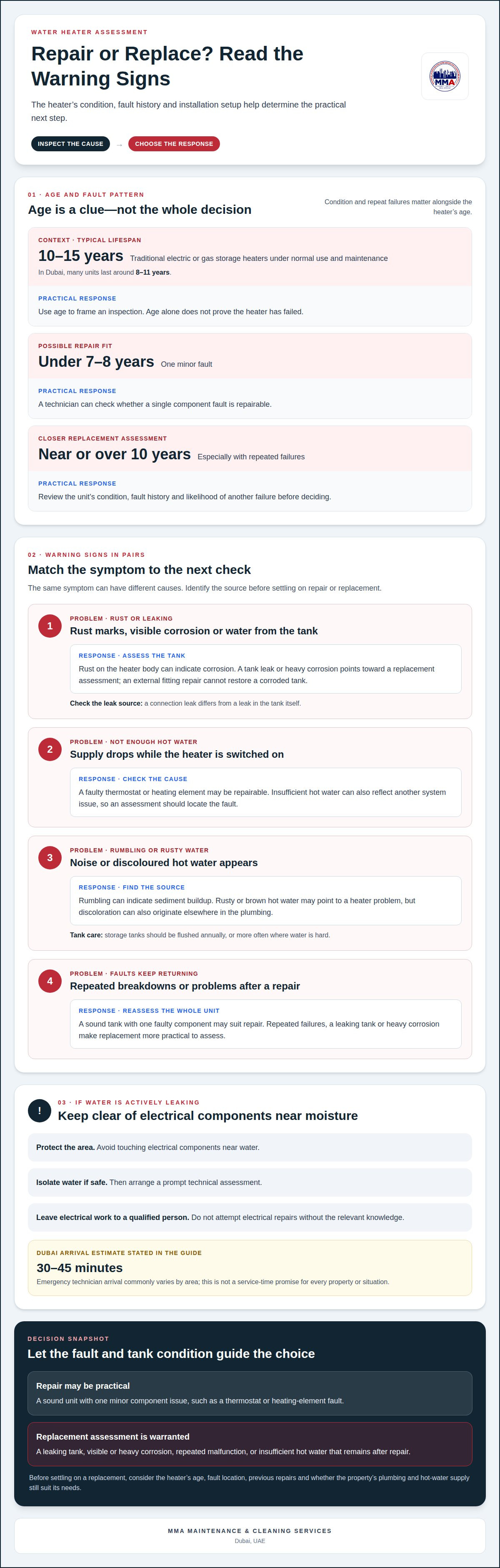
Age helps frame the decision, but condition and fault history matter too. Traditional electric or gas storage heaters typically last about 10 to 15 years under normal use and maintenance. In Dubai, many units last around 8 to 11 years. A heater under 7 to 8 years old with one minor fault may be suitable for repair. A unit nearing or exceeding 10 years, especially with repeated failures, deserves a closer replacement assessment.
Consider what has failed and whether the fault keeps returning. A technician can assess thermostat, heating-element, wiring, valve, or piping problems in an electric storage heater. A single faulty component may be repairable. Repeated breakdowns, a leaking tank, visible corrosion, or insufficient hot water after a repair point toward replacement. A leak at a connection differs from a tank leak, so identifying the source matters.
For an emergency, such as active leaking, protect the area from water and avoid touching electrical components near moisture. If safe, isolate the water supply and arrange a prompt technical assessment. Emergency water-heater technician arrival in Dubai is commonly 30 to 45 minutes, depending on the area. That estimate is not a service-time promise for every property or situation.
To decide whether to repair or replace, weigh the heater’s age, the fault’s location, previous repairs, and the likelihood of further failure. A sound unit with one component issue may be worth repairing. A heavily corroded or repeatedly malfunctioning tank can make replacement more practical. In villas, also consider whether the existing plumbing and hot-water supply still suit the household.
If the issue involves a heater connection or leaking pipe, plumbing support can help address the property’s plumbing needs.
Tank corrosion and replacement warning signs
Rust marks on a water heater’s body indicate corrosion and can point to the need for full replacement. A leaking tank is another serious warning sign because a repair to an external fitting cannot restore a corroded tank. Some storage-tank heaters develop problems after 8 to 12 years, depending on use, water quality, and maintenance. Age alone does not prove failure, but age combined with visible corrosion warrants a careful inspection.
Watch for changes in hot-water supply and heater operation. Insufficient hot water while the unit is switched on can signal a faulty thermostat or heating element, but may also reflect another system issue. Rumbling can indicate sediment buildup inside the tank. Rusty or brown hot water may point to a heater problem, although discoloration can originate elsewhere in the plumbing. Identify the source before deciding whether repair can restore normal operation.
- Corrosion: Rust marks on the heater body or water leaking from the tank call for an assessment of replacement.
- Heating problems: A technician can assess the thermostat and heating element when hot water remains insufficient.
- Noise or sediment: Rumbling can accompany sediment buildup, which storage tanks should be flushed annually, or more often where water is hard.
- Safety components: Periodic inspection and testing of the pressure-relief valve, thermostat, and other safety components can help identify faults.
Repeated faults, heavy corrosion, or a tank leak make continued repair a poor fit for the underlying problem. A sound tank with a faulty thermostat or heating element may be repairable. Distinguish the symptom, such as rumbling or reduced hot-water supply, from its cause. An inspection can locate the fault and establish whether repair will address it or replacement is more suitable.
Electric, gas and solar water heater services
Electric, gas, solar, storage-tank, and tankless heaters have different connections and maintenance needs. For Dubai homes, the practical choice depends on the existing setup, hot-water demand, available space, and the changes installation would require. Assess each system as a complete setup, not just by heater type.
Electric storage heaters use a heating element, thermostat, wiring, and valves. Fault diagnosis may cover the thermostat, element, piping leaks, wiring, and valve problems. A failed element may explain poor heating, while a leak at a connection needs a separate plumbing assessment. Before replacement, match the new unit to the electrical capacity and existing connections. Incorrect electrical work can cause damage, so keep the supply isolated during work.
Gas heaters bring fuel connections and ventilation into the installation plan. A change from an electric storage tank to a gas or tankless model may require gas-line, ventilation, plumbing, or electrical-capacity upgrades. Solar heaters add a collector and related system connections, so the property layout and existing equipment affect installation. Dubai gets over 300 days of sun a year, but that figure alone cannot establish whether a solar system suits a particular home.
Tankless units heat water on demand and can last 15 to 20 years or longer. They may struggle when several taps or showers run at once unless sized for that demand. A storage tank keeps a reserve of hot water, while tankless performance depends on correct sizing and simultaneous use. Compare the household’s peak demand, not only the heater’s label, before selecting a system. The efficient option is the one that meets demand and fits the property’s connections and capacity.
For electric heater wiring or connection work, discuss electrical work as part of planning the installation.
MMA Maintenance & Cleaning Services
MMA Maintenance & Cleaning Services can help coordinate property work around a water heater decision. If an inspection identifies an electrical issue affecting the heater’s supply or connections, its Electrical service can address that property need. Keep the scope clear: diagnosing and replacing a water heater is distinct from electrical work.
For other property requirements, MMA Maintenance & Cleaning Services also provides House Cleaning, Facade Cleaning, and Painting. These services may suit wider property upkeep when heater work is part of a broader maintenance plan, but they do not replace an assessment of the unit itself.
Share the property issue and the work you need to discuss the next steps clearly. Contact MMA Maintenance & Cleaning Services to discuss your requirements.
Plan the next step for your property
If a water heater needs attention, consider how the issue fits your property’s wider maintenance needs. The unit, its connections, and the intended use of the space can help you define what work may be needed. A clear scope helps you plan without treating a heater fault as an isolated property concern.
MMA Maintenance & Cleaning Services handles practical property work, including electrical work where relevant. Its House Cleaning and Facade Cleaning services can also meet separate upkeep requirements. Clearly defining each task helps you discuss the right work for your home or commercial property.
Share the issue and the property details when you are ready to discuss next steps. Contact MMA Maintenance & Cleaning Services to talk through your requirements and move forward with a clear plan.
Frequently Asked Questions
Repair vs Replace: When Should You Choose What?
Choose repair when a technician identifies a specific fault that can be corrected without addressing tank damage. Replacement is usually more suitable when the tank itself leaks, corrosion is extensive, or faults keep returning. For example, a control issue and a leaking tank call for different decisions. The unit’s condition, repair history, and suitability for your household all matter.
What About Repair Instead?
Repair can restore operation when the problem is limited to a replaceable component or connection. For example, a faulty thermostat or heating element may be assessed separately from the tank. A technician can also trace whether a leak comes from the plumbing or the heater itself. This distinction helps avoid treating a connection fault as proof that the entire unit has failed.
What Should You Consider When Choosing the Service Provider?
Look for a clearly defined scope that identifies the suspected fault, proposed repair or replacement, and any related plumbing or electrical work. For a gas or solar system, the assessment should account for its specific connections. In an apartment, access and building arrangements may affect the work plan. Clear communication helps you understand what the service covers before work begins.
When Repair Makes Sense?
Repair is often reasonable when the heater is serviceable and inspection finds one isolated fault. A unit with a functioning tank, no signs of corrosion, and a faulty thermostat is one example. A technician should explain which component needs attention and test the heater after the work. If the same problem returns, reassess whether another repair is practical.
When Replacement Is Wiser?
Replacement is wiser when the tank leaks, corrosion is extensive, or the heater repeatedly fails despite repairs. It may also make sense when the current system no longer suits the property’s hot-water demand or installation setup. Before selecting a replacement, consider the available space, existing connections, and simultaneous use of taps or showers. These details help match the system to the property.
Which Companies Offer Water Heater Replacement Services in Dubai?
MMA Maintenance & Cleaning Services provides property maintenance and plumbing work in Dubai, as well as electrical work. When discussing your requirements, share the heater type, symptoms, and property setting. This gives the team practical context for understanding your property’s technical needs.


